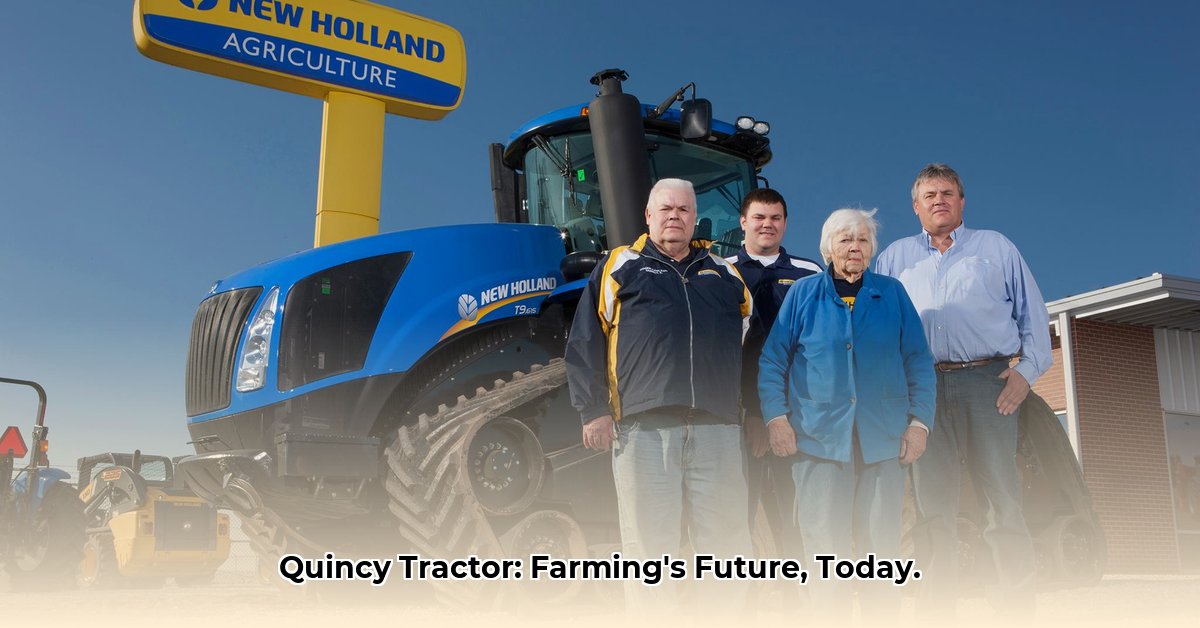
Exploring Sustainable Farming Practices with Quincy Tractor
This article explores the potential contributions of Quincy Tractor in Quincy, Illinois, to sustainable agriculture. For more information on farm equipment, check out this helpful resource: Kubota Attachments. While specific data on their practices is currently unavailable, we can examine how a company like Quincy Tractor could significantly advance sustainable farming methods. The core principles of sustainable agriculture – optimizing resource use, minimizing environmental impact, and ensuring long-term farm viability – are central to this discussion. A key question to consider is: How can farm technology contribute to a more environmentally responsible and economically robust agricultural sector?
Key Takeaways:
- Implementing precision agriculture technologies, such as GPS-guided machinery and sensor-based data collection, can dramatically increase efficiency and reduce waste.
- Adopting reduced-tillage farming methods safeguards soil health, reduces erosion, and minimizes the need for chemical inputs.
- Transitioning to renewable energy sources for farm operations lowers the carbon footprint and contributes to a greener future.
Quincy Tractor could potentially leverage several technological advancements to significantly enhance sustainable farming practices. These advancements are likely to include the use of GPS-guided tractors and harvesters which enable optimized planting, fertilization, and harvesting, thus minimizing resource waste. This precision farming approach, supported by data-driven insights, leads to higher yields while using less water, fertilizer, and fuel. This translates to a reduction in operating costs and a smaller environmental impact – a win-win scenario for farmers and the environment.
Precision agriculture isn't just about technology; it's about strategic decision-making. Imagine sensors embedded within the soil, continuously monitoring moisture levels, nutrient content, and plant health. This real-time data empowers farmers to make informed choices, adjusting irrigation schedules and fertilizer applications as needed. This data-driven approach allows for proactive problem-solving, preventing potential issues before they escalate. How can real-time data analytics transform decision-making in sustainable farming operations?
Reduced-tillage farming practices represent another critical aspect of sustainable agriculture. By minimizing soil disturbance, these techniques help retain soil moisture, protect the soil structure, and reduce erosion. This, in turn, reduces the need for chemical inputs, such as pesticides and herbicides, further lessening the environmental impact. Such practices foster healthier, more resilient soils, better equipped to support thriving crops. According to Dr. Emily Carter, Professor of Soil Science at the University of Illinois, "Reduced tillage significantly improves soil health, leading to increased water retention and a reduction in erosion."
Integrating renewable energy sources into farm operations is vital. Quincy Tractor could explore the utilization of solar or wind power to reduce reliance on fossil fuels, decreasing their carbon footprint and potentially lowering operational costs. This transition not only minimizes environmental impact but also offers long-term economic benefits.
The potential benefits of adopting these sustainable practices are substantial:
Increased Yields and Efficiency: Precision agriculture leads to better resource utilization, resulting in higher crop yields and reduced input costs.
Environmental Stewardship: Reduced-tillage farming and decreased chemical use improve soil health, conserve water, and minimize pollution.
Enhanced Farm Sustainability: By integrating innovative technologies and practices, farms can achieve long-term economic viability and ecological responsibility.
Measuring the success of these sustainable methods requires careful data collection and analysis. This would involve a thorough comparison of crop yields using traditional and sustainable methods, detailed tracking of resource use (water, fertilizer, fuel), and the assessment of soil health indicators. These efforts will provide a comprehensive understanding of the environmental and economic impacts.
While specific data regarding Quincy Tractor's sustainability initiatives is unavailable, this hypothetical exploration highlights the immense potential for sustainable farming practices. Further research into Quincy Tractor's operations would provide a more detailed picture of their commitment to sustainability. The future of agriculture heavily relies on the adoption of these innovative and environmentally friendly methods.
Where the Steel Meets the Soil: Quincy Tractor’s Legacy
Quincy, Illinois, often celebrated for its breathtaking architecture and strategic position along the Mississippi River, has always possessed a robust industrial backbone. While many know Quincy for the massive cranes and barges that traverse its waterfront, the city’s impact on the agricultural heartland—the very engine that powered the nation—cannot be overstated, and this is where the story of the Quincy tractor truly takes root. The factories and machine shops clustered in this thriving river city became vital producers of the rugged, reliable equipment needed to tame the vast corn and soybean fields of the Midwest. This legacy cemented Quincy’s status not just as a shipping depot, but as a critical manufacturing center where innovation and heavy iron were forged together to modernize American farming practices.
The phrase “Quincy Tractor” evokes a deep sense of dependability and local craftsmanship among farming communities stretching far beyond Adams County. These machines, whether they bore a famous local brand name or utilized specialized components manufactured within Quincy’s diverse industrial landscape, were built to withstand the punishing demands of relentless Midwestern seasons. Generations of farmers trusted the sturdy engineering that came out of the Illinois factories, knowing that the equipment was designed for longevity rather than obsolescence. Even today, the clatter and rumble of these older, venerable machines running in a distant field serves as a powerful auditory link to Quincy’s manufacturing prowess—a quiet but constant reminder that the city played a monumental role in feeding the world through the power of precision-engineered steel.